Wellness Program
Wellness Wheel
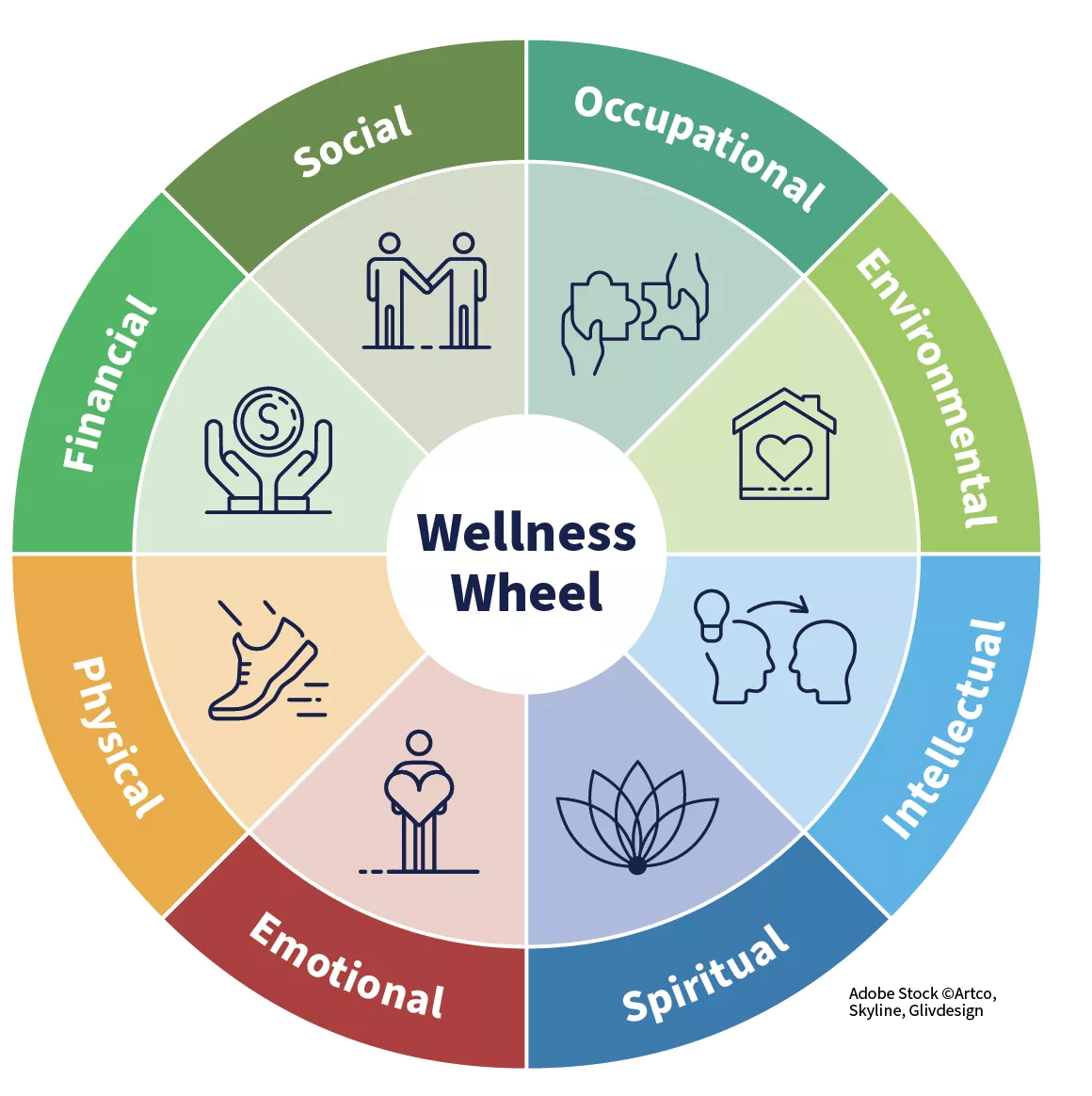
The Wellness Program embraces a holistic approach to wellness through eight interconnected dimensions of well-being: emotional, environmental, financial, intellectual, occupational, physical, social, spiritual. Together, these dimensions help support a balanced lifestyle and encourage personal growth, resilience and overall well-being.
Review an overview of each dimension below. Then, dig deeper into resources and information.
Emotional health includes effectively managing stress, staying on top of schoolwork and other responsibilities, getting adequate sleep, asking for help and talking with a counselor when needed.
Environmental wellness involves awareness of one’s surroundings including the physical environment, one’s community and personal space.
Financial wellness relates to living within your financial means and planning for your financial future.
Intellectual wellbeing includes staying curious and engaged in learning new things. Be creative, read for fun, stay current about social and political issues and join clubs that focus on enhancing intellectual interests.
Occupational wellness means seeking out a livelihood and hobbies that align with one's interests, values and goals.
Physical wellness involves taking care of all aspects of physical health: exercise and movement, eating well-balanced meals, staying hydrated, getting adequate and quality sleep, managing stress and getting preventative medical care.
Social wellness includes establishing and maintaining a strong social network of healthy relationships that provide guidance and support.
Spiritual wellness is a process of understanding beliefs, values and ethics that help guide your life.
Monthly Wellness Tip
This month is focused on emotional wellness. While sometimes it can feel like our emotions are out of our control, emotional wellness means being able to recognize and name our feelings and make conscious efforts to be able to manage them.
Often when we are overwhelmed or our emotions feel uncontrollable, it’s because a stress response has triggered our bodies to respond with heightened reactions to events. To regain control of your emotions, it’s helpful to move your response from the sympathetic nervous system (fight or flight) to the parasympathetic nervous system (rest and digest).
Deep breathing is an effective way to regulate which nervous system is active by forcing us to focus on a natural and controllable mechanism of survival (breathing). The next time you are feeling overwhelmed or like your emotions are getting the better of you, take a moment to re-regulate with some controlled deep breathing.
Wellness Events