
Wellness Program Resources
Be Intentional About Words and Images You Allow to Pass Through Your Mind
Most people will overlook or dismiss this, but the words we hear, the words we sing and speak and the images we see all impact our very being by setting our default mode. “Garbage in, garbage out,” is a popular phrase and it’s true. Fill yourself with words, songs and images that keep life in perspective no matter where you are or what you do.
Resources
"The Anxious Generation: How the Great Rewiring of Childhood is Causing an Epidemic of Mental Illness" by Jonathan Haidt, Ph.D. (2024).
Jonathan Haidt is a social psychologist and professor of psychology at New York University
Stern School of Business.
Instagram: jonathonhaidt
Website: jonathanhaidt.com
"What happened to You? Conversations on Trauma, Resilience, and Healing" by Bruce D. Perry, M.D., Ph.D., and Oprah Winfrey, (2021).
"Adult Children of Emotionally Immature Parents: How to Heal from Distant, Rejecting, or Self-Involved Parents" by Lindsay C. Gibson, PsyD. (2015).
"Protocols: An Operating Manual for the Human Body" by Andrew Huberman, Ph.D. (2026)
Andrew Huberman, Ph.D., neuroscientist and professor of neurobiology and ophthalmology
at Stanford University School of Medicine.
Instagram: hubermanlab
Website: hubermanlab.com
Financial Wellness can be described as achieving a healthy relationship with money through budgeting, saving and responsible financial decision-making. Financial wellness provides stability, reduces stress and creates opportunities to reach your personal and professional goals.
Resources
Anoka-Ramsey Community College, Office for Financial Aid
Educational Credit Management Corporation (ECMC)
ECMC is a nonprofit organization working with college students to promote financial literacy and success.
Intellectual wellness can be developed by taking classes. It can also be achieved by reading a new book, creating something artistic, engaging in other cultures or cultural activities, trying something new or joining a group and sharing your knowledge with others.
Resources
"Protocols: An Operating Manual for the Human Body" by Andrew Huberman, Ph.D. (2026)
Andrew Huberman, Ph.D., neuroscientist and professor of neurobiology and ophthalmology
at Stanford University School of Medicine.
Instagram: hubermanlab
Website: hubermanlab.com
"Learning How to Learn: How to Succeed in School Without Spending All Your Time Studying; A Guide for Kids and Teens" by Barbara Oakley (2018)
Barbara Oakley, PhD., professor of engineering, Oakland University, Michigan
Website: barbaraoakley.com
Developing your occupational wellness involves choosing academic and career paths that you find fulfilling and align with your personal values and goals. When you enjoy what you do, you will be more motivated, more satisfied and more productive at work. There are many ways to apply your interests and strengths to create a positive impact locally and globally.
Resources
Take a career assessment
Choose healthy patterns for sleep, nutrition, and movement
“Exercise [movement] has a more profound and sustained positive effect on mood, anxiety, cognition, energy, and sleep than any pill I can prescribe.” Dr. Anna Lembke, MD, Dopamine Nation (2021), page 152.
Resources
Anoka-Ramsey's Health and Wellness Centers
Choose Healthy Food
Remember that food fuels the body just like gas refuels cars. If oil gets put into the gas tank, the car stops working. Appropriate fuel for the body includes all leafy greens and green vegetables, berries and nuts of all types, beans, eggs, meat and other natural protein sources, as well as whole wheat grains found in bread, pasta or quinoa. And the bonus here is that many vegetables and fruits have anti-inflammatory properties which make your muscles work better. And don’t forget to drink plenty of water to keep every system in your body hydrated and functioning optimally.
Resources
"Protocols: An Operating Manual for the Human Body" by Andrew Huberman, Ph.D. (2026)
Andrew Huberman, Ph.D., neuroscientist and professor of neurobiology and ophthalmology
at Stanford University School of Medicine.
Instagram: hubermanlab
Website: hubermanlab.com
World Health Organization
Instagram: WHO
Healthy Diet Fact Page
Get Enough Sleep
Did you know there is a free treatment that helps you stay energized, boosts your mood, keeps your immune system up to speed, reduces unhealthy food cravings, helps you think more clearly, and improves your learning and memory? Just seven to eight hours of sleep each night does all of this and more! You will feel better, learn better, and live longer.
Resources
"Protocols: An Operating Manual for the Human Body" by Andrew Huberman, Ph.D. (2026)
Andrew Huberman, Ph.D., neuroscientist and professor of neurobiology and ophthalmology
at Stanford University School of Medicine.
Instagram: hubermanlab
Website: hubermanlab.com
Matthew Walker, Ph.D., professor of neuroscience and biomedical engineering at University
of Texas, Dallas.
Instagram: drmattwalker
Website: sleepdiplomat.com
Sleeping With Science, TED series on sleep with Matthew Walker, PhD.
Mindfulness, Meditation, Spirituality, Faith
Spirituality is separate from religion and an integral part of physical and mental wellness. According to Dr. Lisa Miller, Ph.D., Professor of Psychology and Education at Columbia University Teachers College on the Finding Mastery Podcast Episode 568, “… through the lens of science, spirituality is not a belief. It is a capacity, an inborn capacity, for transcendent perception, to be able to feel and know the presence of the deeper nature of life.” Whereas religion is experienced by one’s environment, spirituality has an innate component. Spirituality supports mental health and serves as a protective factor against addiction, both of which promote high quality of life.
Resources
Gervais, Michael, Ph.D. (Host) with Dr. Lisa Miller (Ep. 568) [Audio podcast]. In Finding Mastery Podcast
Wellness Events
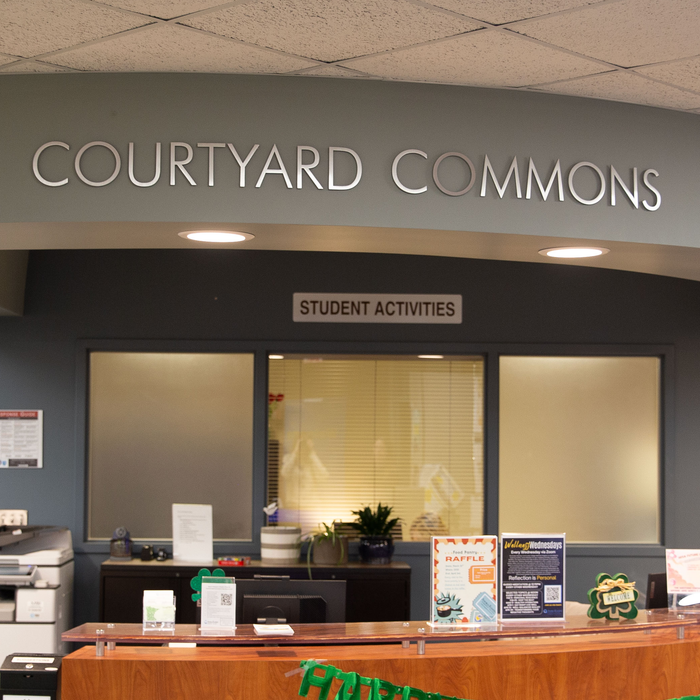
Establish and Maintain Responsive Relationships with Family and Friends
“Make new friends and keep the old, some are silver, the others gold.” While that is a slightly corny old statement our grandparents recited, it’s nonetheless true. Relationships with friends and family and the social support they provide constitute a significant part of health and wellbeing on all fronts. Not only great for emotional health, but research tells us that students who are socially connected on campus also have higher success rates in the classroom. Take advantage of having access to Anoka-Ramsey’s many student-driven clubs or organizations. Find your pool and dive right in!
Resources
Student Life at Anoka-Ramsey
Clubs and Organizations at Anoka-Ramsey